A work injury chiropractor evaluates and treats musculoskeletal conditions caused by repetitive strain, lifting injuries, workplace accidents, and physically demanding job duties. The focus is on improving mobility, reducing spinal stress, and helping patients better understand how their work activities may affect their bodies.
Many workplace injuries involve repetitive movements that gradually affect spinal discs, muscles, and joints. According to the National Institute for Occupational Safety and Health, work-related musculoskeletal disorders are common in the United States.
Unlike general chiropractic visits focused mainly on wellness or occasional discomfort, work injury care begins with a detailed review of how the injury occurred and what physical tasks may be contributing to symptoms. The evaluation focuses on the spine because workplace strain commonly affects the neck and lower back. Repetitive lifting, prolonged standing, patient handling, and heavy equipment operation can all place significant stress on these areas.
Work injury chiropractic care also involves documentation. Providers maintain records of symptoms, movement limitations, and treatment progression, which may be relevant during workers’ compensation claims or workplace accommodation discussions.
This type of treatment is frequently used by individuals working in physically demanding occupations, but repetitive stress injuries can affect office employees, teachers, healthcare staff, retail workers, and long-distance commuters as well.
No. Repetitive sitting, prolonged standing, computer work, and repetitive motion can all contribute to spinal strain and musculoskeletal problems over time.
Work injuries in Fulton involve lower back strain, neck pain, repetitive stress conditions, disc injuries, shoulder problems, and lifting-related musculoskeletal strain. Local employment patterns play a major role in the types of injuries workers experience throughout Callaway County.
Agriculture remains one of the area's dominant industries, and farm-related injuries are especially common during the harvest season between August and October. Workers perform repetitive lifting, climb on and off machinery, operate tractors for extended periods, and handle heavy grain or feed bags. These repetitive motions place significant stress on the spine and surrounding joints.
Tractor vibration is another major contributor to spinal discomfort. Long hours operating combines, grain wagons, and other heavy equipment may gradually increase pressure affecting spinal discs and lower back structures.
Employees at Fulton State Hospital work in a demanding forensic psychiatric environment. Nurses, aides, and patient-care staff may perform repetitive lifting and patient transfers that can contribute to neck, shoulder, and lower back injuries common in healthcare settings. Because the hospital is operated by the Missouri Department of Mental Health, employees injured on the job may pursue benefits through Missouri’s workers’ compensation system.
The Missouri School for the Deaf represents another important employer in Fulton. Teachers, staff members, and support personnel may experience repetitive standing strain, neck tension, and movement-related discomfort associated with daily work responsibilities.
Retail and service employees working along Court Street and Business US-54 also face injury risks from stocking, lifting, prolonged standing, and repetitive movements throughout long shifts.
During harvest season, agricultural workers often spend extended hours performing physically repetitive tasks with limited recovery time between shifts. This combination of fatigue, heavy lifting, and machinery vibration can significantly increase spinal strain and the risk of injury.
Yes. Repetitive movement and long-term physical strain can gradually affect spinal discs, muscles, joints, and nerves even when no single accident occurs. Many workplace injuries develop slowly over time because the body accumulates repeated stress from daily activities.
Lifting is one of the most common contributors. Repeated bending, twisting, and carrying weight can place continuous pressure on the lower spine, particularly when movements are performed frequently throughout the workday.
Standing on concrete floors for long periods may also affect spinal alignment and surrounding joints. Healthcare workers, retail employees, and manufacturing staff often experience lower back stiffness or leg discomfort after extended shifts.
Long commutes can contribute to additional strain. Many Fulton residents regularly travel to Columbia or Jefferson City for work, using US-54. Sitting for prolonged periods increases pressure within the lumbar spine and may aggravate existing disc problems.
Heavy equipment vibration is another overlooked factor. Tractor operation and machinery use create repetitive force affecting the spine over time, especially when combined with physically demanding labor.
One challenge with repetitive strain injuries is that symptoms often develop gradually. Workers may initially notice only mild soreness or stiffness before symptoms become more disruptive months later.
Yes. Many work-related musculoskeletal injuries develop progressively because of repetitive movement and cumulative spinal stress rather than a single traumatic event.
Missouri workers’ compensation provides medical coverage and other benefits for employees injured while performing work-related duties. The system is designed to help workers receive treatment for injuries arising from job activities without needing to prove employer negligence.
Workers’ compensation differs from personal injury claims because it generally functions as a no-fault system. This means employees may qualify for benefits regardless of who caused the accident, provided the injury occurred during work-related activity.
The process typically begins when the injury is reported to the employer. Timely reporting is important because delays can complicate documentation and claim review.
In Missouri, chiropractic care may be included as part of workers’ compensation treatment depending on the claim and authorization process. Employees dealing with spinal injuries, repetitive strain, or movement-related conditions often seek chiropractic evaluation as part of their recovery.
State employees in Fulton, including staff at Fulton State Hospital and the Missouri School for the Deaf, may navigate workers’ compensation through state-administered processes specific to public employment.
Missouri patients also generally do not need a physician referral to begin chiropractic care, which can make evaluation after a workplace injury more accessible.
According to the Missouri Department of Labor and Industrial Relations, workers’ compensation laws in Missouri provide medical and wage-related benefits for qualifying workplace injuries.
Yes. Chiropractic treatment may be included in workers’ compensation cases involving musculoskeletal and spine-related injuries, depending on claim authorization and treatment recommendations.
Many Fulton-area workers seek treatment at Lordex because they are looking for non-surgical care focused on spinal injuries, repetitive strain conditions, and mobility-related workplace pain. Since specialized spine-focused treatment options are limited locally, traveling to Columbia for care is already common for many residents.
Employees choose Lordex because the clinic emphasizes spinal decompression and rehabilitation-focused chiropractic treatment rather than relying only on short-term symptom management. Workers experiencing disc-related pain, sciatica, neck strain, or repetitive lifting injuries may seek a more detailed evaluation to understand the source of their symptoms.
The drive from Fulton to Columbia along US-54 is familiar to many people already commuting for work, specialist appointments, or advanced medical care. This makes ongoing treatment more manageable for employees who continue modified work duties or navigate recovery schedules.
Lordex also regularly works with patients involved in workers’ compensation cases and understands the importance of maintaining organized documentation related to treatment progression and mobility limitations.
For many workers, exploring non-surgical treatment options before considering more invasive procedures can help them decide how they want to approach recovery.
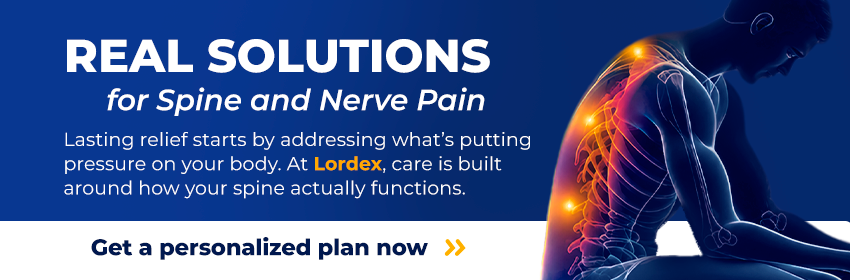
Lordex Spine Center Of Columbia treats workplace injuries using chiropractic care, rehabilitation-focused treatment, and advanced spinal decompression designed to address spinal strain and mobility-related conditions without invasive procedures. The goal is to evaluate how work activities affect the body and to develop a treatment approach based on the patient’s specific job demands and symptoms.
Many workplace injuries involve the spine because repetitive lifting, prolonged standing, awkward movement, and vibration exposure place ongoing stress on spinal discs and surrounding joints. As these structures become irritated or compressed, workers may begin experiencing stiffness, radiating pain, numbness, or movement limitations that interfere with daily responsibilities.
Chiropractic adjustments may be used to improve spinal movement and reduce restrictions affecting the neck, back, or surrounding joints. Restoring mobility can help reduce tension patterns that develop when the body compensates after injury.
Rehabilitation-focused treatment is often incorporated to improve flexibility, movement quality, and overall function. Depending on the condition, recommendations may include supportive mobility exercises and strategies to reduce repetitive strain during work activities.
One of the clinic’s distinguishing features is the FDA-cleared Lordex Traction Unit. This spinal decompression system is designed to gently reduce pressure affecting spinal discs and nerves. Employees experiencing sciatica, disc-related lower back pain, or repetitive compression injuries may seek decompression therapy as a non-surgical treatment option.
This is especially relevant in Fulton because many occupations involve repeated spinal loading. Agricultural labor, nursing responsibilities, patient handling, warehouse lifting, and heavy machinery operation all place continuous stress on the lumbar spine over time.
For workers trying to avoid surgery or prolonged downtime, conservative treatment can be an important option to explore before considering more invasive procedures.
Workers’ compensation claims may become disputed when disagreements arise regarding how the injury occurred, whether the condition is work-related, or what treatment should be authorized. This is common in cases involving repetitive strain or delayed symptom development.
One of the most frequent disputes involves injuries that develop gradually rather than resulting from a single accident. Employees may experience worsening pain over months before realizing the condition is connected to repetitive job duties. Because no specific incident occurred, employers or insurers sometimes question whether the condition qualifies as work-related.
Delayed symptom patterns can also create complications. Workers may continue performing their normal duties despite early discomfort and only report the injury after symptoms become more severe. This delay can raise questions about when the injury actually occurred.
Treatment authorization disputes are another possibility. In some situations, disagreements arise regarding what type of care should be covered or how long treatment should continue.
Documentation becomes particularly important when disputes occur. Detailed records describing symptoms, work duties, physical findings, and treatment progression may help create a clearer picture of how the injury developed and affected function over time.
Some workers may also undergo independent medical evaluations (IMEs) as part of the claims process. These evaluations are used to assess the condition and determine whether additional treatment or work restrictions may be appropriate.
Depending on the circumstances, disputes may move through Missouri’s administrative workers’ compensation system or become connected to broader legal proceedings involving local venues such as Callaway County or Boone County.
In some cases, treatment may continue while aspects of a claim are being reviewed, though the specific process depends on authorization decisions and the details of the case.
Early evaluation after a workplace injury can help identify movement restrictions, spinal strain, and nerve-related symptoms before they become more persistent or difficult to manage. Many workers initially attempt to continue their normal routines despite discomfort, especially when symptoms seem mild during the early stages.
Over time, however, untreated strain may begin affecting posture, movement patterns, and overall mobility. Muscles surrounding the injured area often compensate for pain or instability, which can gradually create additional stress elsewhere in the body.
Prompt treatment may also help workers better understand how the injury is affecting them before symptoms worsen significantly. Lower back stiffness that initially appears only after work may eventually begin interfering with sleep, commuting, or everyday movement.
Early documentation is another important consideration. Recording symptoms, mobility limitations, and treatment findings shortly after the injury creates a more detailed timeline that may become relevant during workers’ compensation review processes.
This is especially important for repetitive strain injuries, as symptoms often develop gradually rather than immediately after a single incident. Consistent documentation can help show how the condition progressed over time.
For many Fulton workers, prompt evaluation also supports discussions about modified duties or activity restrictions during recovery. Knowing how the injury affects movement can help employees and providers make more informed decisions about returning to work safely..
Your first visit to Lordex Spine Center focuses on understanding how your work activities and injury history may be affecting your spine, joints, and overall movement. The evaluation is designed to identify movement restrictions, repetitive strain patterns, and areas where the body may be compensating after injury.
The appointment typically begins with a detailed discussion of your work duties and symptoms. Your provider may ask about lifting requirements, repetitive tasks, standing duration, machinery use, or previous injuries related to your occupation.
Information about how symptoms developed is also important. Some workers experience sudden injuries after lifting accidents or falls, while others develop pain gradually after months or years of repetitive strain.
A physical examination follows, during which posture, spinal mobility, flexibility, and movement quality are assessed. Your provider may observe how specific movements affect your symptoms and identify areas where movement becomes restricted or painful.
If imaging or prior medical evaluations already exist, those records may also be reviewed. However, movement-based findings remain particularly important because many work-related injuries involve functional limitations not always visible on imaging studies alone.
Following the evaluation, your provider will explain what may be contributing to the symptoms and discuss possible treatment recommendations. Depending on the condition, this may include chiropractic adjustments, rehabilitation-focused care, decompression therapy, or supportive mobility strategies designed around the patient’s job demands.
Work injuries and personal injuries involve different legal and insurance structures, even though both may include similar physical conditions such as back strain, neck injuries, or disc-related pain.
Workers’ compensation cases involve injuries occurring during job-related duties. The system generally operates on a no-fault basis, meaning employees do not need to prove negligence to qualify for benefits. Instead, the main issue is whether the injury arose from work activity.
Personal injury claims usually involve negligence, such as car accidents, unsafe property conditions, or other incidents in which another party may be legally responsible for the injury.
Both types of cases involve medical documentation, symptom tracking, and treatment records. However, the insurance processes and legal standards differ significantly.
For example, a nurse who injures their back lifting a patient at Fulton State Hospital may pursue workers’ compensation treatment, while someone injured in a rear-end collision on US-54 may pursue a personal injury claim through auto insurance.
Despite these differences, both situations may involve chiropractic care and rehabilitation-focused treatment to improve movement and reduce spinal strain.
It’s important to know which system applies to your situation to better navigate treatment decisions and documentation requirements after an injury occurs.

Repeated vibration exposure is one of the most overlooked causes of workplace spinal strain, especially in agricultural and equipment-heavy industries common throughout Callaway County. Over time, vibration affecting the spine may contribute to disc stress, joint irritation, and chronic lower back discomfort.
Tractor operators spend long hours sitting on machinery during planting and harvest seasons. While the movement may seem relatively minor at any given moment, the spine absorbs repeated force continuously throughout the workday.
Heavy equipment vibration affects more than just the lower back. The body must constantly stabilize itself during operation, which can create tension affecting the hips, shoulders, and neck as well.
Long-distance driving may create similar issues. Workers commuting daily between Fulton, Columbia, and Jefferson City remain seated for extended periods while absorbing road vibration and maintaining static posture.
These repetitive stress patterns develop slowly, which is why many workers do not immediately recognize them as injury-related until symptoms become persistent.
According to the Occupational Safety and Health Administration, repetitive motion, vibration exposure, and ergonomic strain are recognized workplace factors associated with musculoskeletal injuries. These repetitive stress patterns develop slowly, which is why many workers do not immediately recognize them as injury-related until symptoms become persistent.
Workers sometimes feel pressure to return immediately to full activity levels, especially in industries where staffing shortages or seasonal demands create additional stress. However, returning too quickly before mobility and movement patterns improve may increase the risk of re-injury. Movement quality, spinal stability, and the ability to tolerate repetitive activity all influence the likelihood that symptoms will return once normal job duties resume.
This is especially relevant for agricultural workers during planting and harvest seasons, healthcare employees performing patient handling, and retail staff spending long hours on their feet. These occupations place ongoing physical demands on the body even after symptoms begin improving.
Recovering workers need to understand work restrictions or modified duty recommendations to reduce unnecessary strain during recovery. Some workers may temporarily adjust lifting requirements, standing duration, or repetitive movements while treatment continues.
The goal is not simply to temporarily avoid pain, but to improve how the body handles movement and workload over time, so that employees can perform their responsibilities more comfortably and safely.
Chiropractors commonly evaluate work-related musculoskeletal injuries involving the spine, joints, and muscles, as well as repetitive strain and lifting-related conditions.
Repeated lifting and bending can place pressure on spinal discs over time and may contribute to disc-related conditions.
Chiropractic care may be included in Missouri workers’ compensation cases depending on authorization and treatment recommendations.
Healthcare employees experiencing work-related musculoskeletal injuries may seek chiropractic evaluation as part of treatment, depending on their case.
No. Missouri patients generally do not need a physician referral to begin chiropractic care.
Treatment may continue during aspects of the claims process, depending on authorization and case details.
Recovery timelines vary depending on the severity of the injury and the body's response to treatment.
You can still pursue a chiropractic evaluation even if you previously received emergency or orthopedic care.
Content is provided for informational purposes only and should not be considered medical advice. Consult a licensed healthcare provider for diagnosis and treatment recommendations.
If you were injured at work in Fulton or anywhere in Callaway County, scheduling an evaluation can help identify what may be contributing to your symptoms and what non-surgical treatment options may support your recovery.
Call Lordex at (573) 443-0551 to speak with a provider and arrange your visit or request an appointment through our scheduling system.
Lordex Spine Center regularly works with Fulton-area employees who are dealing with lifting injuries, repetitive strain injuries, disc-related pain, and workplace mobility limitations. Located approximately 25 minutes west on US-54 in Columbia, the clinic provides chiropractic care and advanced spinal decompression to help workers better understand and manage spinal injuries without surgery.
During your visit, you will receive a detailed evaluation and a clear explanation of your symptoms, along with treatment recommendations, so you can make informed decisions about your care and return-to-work planning.

Lordex Accident & Injury Center
3400 Buttonwood Dr Ste C
Columbia, MO 65201
P:(573) 443-0551
F: (573) 442-2959

COPYRIGHT © 2026 Lordex Accident & Injury Center