US-54 and Missouri Boulevard are consistently ranked among Jefferson City’s busiest and most dangerous roads. According to recent Missouri Department of Transportation (MoDOT) data, the average daily traffic volume on US-54 through Jefferson City often exceeds 40,000 vehicles. In comparison, Missouri Boulevard sees more than 25,000 vehicles per day during peak seasons. The combination of high traffic, frequent stops, and higher speeds makes these corridors especially prone to rear-end collisions, side impacts, and sudden braking incidents that often result in injuries.
These conditions increase the chances of rear-end crashes, side impacts, and sudden braking incidents that often lead to injuries.
These conditions increase the chances of rear-end crashes, side impacts, and sudden braking incidents that often lead to injuries.
Crash patterns in Jefferson City reflect national trends. Data from MoDOT Traffic Volume Maps and the Jefferson City Police Department show that intersections along Missouri Boulevard and US-54, such as at Ellis Boulevard and Stadium Boulevard, experience some of the city’s highest rates of crashes. These high-volume intersections combine local commuter traffic, out-of-town travelers, and access to major shopping centers, increasing the risk for serious collisions.
If you want to learn more about local traffic safety, the Jefferson City Police Department’s annual crash report provides detailed analysis of accident hotspots, common causes, and seasonal trends specific to our community. MoDOT TMS Data Zone also publishes Average Annual Daily Traffic (AADT) statistics for Jefferson City, which help residents and planners understand where traffic risks are highest.
US-54 is a major route that carries fast-moving traffic between Columbia and the Lake of the Ozarks. Drivers often travel at higher speeds, and sudden slowdowns can happen without much warning. That creates a higher risk for rear-end collisions.
During peak travel times, traffic volume increases significantly. Commuters, trucks, and out-of-town drivers all share the road. In Jefferson City, this mix complicates predicting movement, especially when vehicles change speed abruptly.
Missouri Boulevard works differently but carries its own risks. It has constant stop-and-go traffic, with drivers entering and exiting shopping centers throughout the day. This creates frequent interruptions in traffic flow.
Missouri Boulevard has many intersections, parking lot entrances, and left turns. These turning points increase the chance of side-impact collisions when drivers misjudge timing or visibility.
Distractions also play a role. Drivers checking directions, looking for stores, or dealing with traffic stress may react more slowly. Even a short delay can lead to a crash in busy areas with tight spacing between vehicles.
Seasonal traffic adds another layer. Travel increases during the summer months as people head toward the lake, bringing more unfamiliar drivers onto these roads. More vehicles and mixed driving habits raise the risk of accidents.
These conditions make both roads more unpredictable. When factors such as speed, volume, and frequent stops combine, even a small mistake on the road can lead to a crash that causes injury.
The most common injuries after a car accident include whiplash, soft tissue strain, and disc-related issues, and they often affect how the spine moves and supports the body. These injuries can cause pain, stiffness, and reduced mobility that may worsen without proper care.
The spine absorbs a large part of the force during a crash. Even when damage is not visible right away, muscles, ligaments, and discs can be affected. This is why many people feel symptoms hours or days after the accident.
Whiplash is one of the most frequent injuries, especially in rear-end collisions. It happens when the head moves quickly back and forth, stretching the neck beyond its normal range. This can strain muscles and ligaments that support the cervical spine.
Soft tissue injuries can also occur in the lower and mid-back. These include muscle strains and ligament sprains that lead to tightness and soreness. People often notice stiffness when trying to turn, bend, or sit for long periods.
Drivers on roads like US-50 or Missouri Boulevard frequently face sudden stops and collisions. These conditions elevate the risk of injuries, even in low-speed crashes.
Disc injuries can develop when the force of a crash compresses the spine. A disc may bulge or become irritated, which can place pressure on nearby nerves. This often leads to pain that spreads beyond the original area.
Some patients experience symptoms in their shoulders, arms, or legs, depending on where the injury occurs. Tingling, numbness, or weakness may appear if nerves are affected. These signs usually indicate that the problem is more serious than a muscle strain.
Patients from Jefferson City often seek follow-up care after visiting the ER, especially when symptoms continue or worsen. Without treatment, these injuries can limit daily movement and affect long-term spinal health.
Early evaluation helps identify the type of injury and guides the next steps. Addressing both soft tissue and disc issues can help restore movement and reduce ongoing discomfort.
At Lordex Spine Center, our team treats auto accident injuries without surgery by reducing pressure in the spine, restoring joint movement, and supporting natural healing. Care focuses on the injured area with targeted, non-invasive methods instead of relying on medication or surgical procedures.
After being involved in a crash, the spine often deals with inflammation, restricted motion, and stress on discs or nerves. Treatment is designed to address those issues step by step, helping the body recover in a controlled and safe way.
One of the main treatments used is spinal decompression with the Lordex traction system. This method gently stretches the spine to reduce pressure inside the discs and relieve stress on surrounding nerves.
By lowering pressure, the body can improve circulation in the injured area. Better blood flow helps deliver nutrients needed for healing. Many patients notice reduced stiffness and better movement as treatment progresses.
Chiropractic adjustments may also be used to restore normal joint motion. When joints move properly again, the surrounding muscles can relax, which helps reduce tension and discomfort.
Care at Lordex follows a clear plan that is adjusted based on how the patient responds. Instead of a one-time treatment, recovery is guided over a series of visits that build on each other.
Patients from Jefferson City frequently seek care after accidents on roads like US-54, requiring more focused attention following their initial ER visit. This structured approach effectively addresses persistent pain that doesn't resolve on its own.
Progress is tracked throughout treatment. As mobility improves and pain decreases, the plan may be adjusted to support long-term stability. The goal is to help patients return to normal activity without ongoing discomfort.
Non-surgical care allows the body to heal while avoiding the risks and downtime of more invasive procedures. Many patients choose this approach to regain function and move forward with confidence after an accident.
If you have already left the ER and are still experiencing pain, it usually means the injury needs follow-up care focused on healing, rather than just stabilization. While emergency rooms prioritize treatment for serious and urgent issues first, they do not provide ongoing treatment for soft tissue, joint, or disc-related problems.
Many patients feel relief knowing nothing is broken, but pain can continue or even increase after a few days. That is because inflammation and deeper tissue damage take time to show up fully. Without proper care, these issues can linger.
Ongoing pain after an accident often comes from muscle strain, joint restriction, or disc pressure. These issues may not always be visible on initial scans, which is why symptoms can persist even after being cleared at the ER.
Patients often need care that focuses on restoring movement and reducing stress in the spine. That is where follow-up treatment becomes important. Instead of waiting for the pain to fade on its own, targeted, personalized care can help address the underlying causes.
Many people from Jefferson City initially visit Capital Region Medical Center first, then look for additional treatment when pain does not improve. This approach is common and part of a full recovery process.
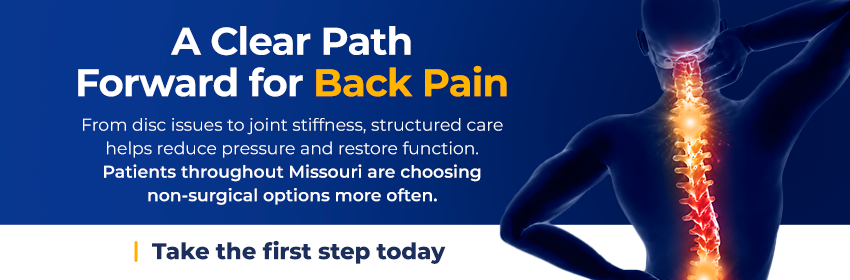
Our team at Lordex Spine Center focuses on helping patients recover after the initial emergency phase. They evaluate how the injury is affecting the spine and build a plan based on the patient’s condition and symptoms.
Treatment may include spinal decompression, chiropractic adjustments, and supportive therapies. Each step is designed to improve movement and reduce pressure on injured areas without surgery.
Our team tracks progress and adjusts care as needed. This helps make sure your recovery stays on track instead of slowing down. Patients often notice changes over time, such as less stiffness and improved comfort during daily activity.
Getting proper follow-up care can make a big difference after an accident. It helps move beyond short-term relief and supports a more complete recovery.
Missouri’s at-fault insurance system means the driver who caused the accident is responsible for paying for damages, including medical treatment. If you are injured, your claim is typically filed against the at-fault driver’s insurance, not your own.
This system affects how and when treatment is paid for. Instead of immediate coverage like in no-fault states, payment often comes after the claim is processed or settled. That can make timing and documentation very important.
After a crash, insurance companies investigate the fault using reports, statements, and evidence. Once the fault is determined, the at-fault driver’s liability coverage pays for medical care and related expenses.
Here is how coverage may apply:
Drivers in Jefferson City often deal with accidents on roads like US-54, where higher speeds increase the chance of serious injury claims. In these cases, understanding coverage options becomes even more important.
Because payment is tied to fault and claims processing, patients may not receive immediate reimbursement for care. This can create delays if you are waiting for insurance approval or settlement.
To help with this, some providers offer treatment options that do not require upfront payment. Care can begin while the claim is still active, allowing patients to focus on recovery instead of financial stress.
Proper documentation is essential. Medical records, treatment plans, and progress notes support your claim and illustrate how the injury impacts your daily life. Keeping these organized can significantly influence the progress of your claim.
Understanding how the at-fault system works helps patients make informed care decisions. It allows you to plan treatment while your claim is being resolved and avoid unnecessary delays in recovery.
Yes, you can often get chiropractic care after a car accident without paying upfront by using a medical lien, also called a Letter of Protection (LOP). This allows treatment to begin now, with payment coming later from your injury claim or settlement.
This option is common in Missouri because it is an at-fault state. Instead of waiting for insurance to pay, patients can start care right away while their case is still being reviewed. That helps avoid delays in recovery.
A medical lien is an agreement between you, your provider, and your attorney or insurance claim. It allows the provider to treat you now and get paid once the case is resolved.
At Lordex Spine Center, patients may qualify for this type of arrangement depending on their situation. This makes it easier to focus on healing instead of worrying about immediate costs.
Our clinic also shares helpful information about treatment and recovery through our blog, where patients can learn more about what to expect after an accident and how care works step by step.
Patients coming from Jefferson City after crashes on roads like US-54 often use these options when dealing with ongoing pain after the ER visit.
Starting care early does more than help with recovery. It also creates a clear record of your injuries and how they affect your daily life. This documentation can be important as your claim moves forward.
Delaying care can make it harder to connect your symptoms to the accident. Insurance companies may scrutinize gaps in treatment, potentially slowing down the process or decreasing coverage.
Getting evaluated and starting care right away helps show that the injury is real and ongoing. It also gives you a structured plan to improve your condition while your claim is being handled.
Access to care without upfront payment removes a major barrier for many patients. It allows you to move forward with treatment and focus on getting back to normal activity.
Chiropractic care and ER-only treatment serve different purposes after a car accident. The ER focuses on urgent injuries and stabilization, while chiropractic care focuses on recovery, movement, and treating the underlying cause of ongoing pain.
Emergency rooms are critical right after a crash. They check for fractures, internal injuries, and serious conditions that need immediate attention. Once those are ruled out, most patients are discharged with basic instructions and sometimes medication.
Emergency room care is designed to handle emergencies, not long-term healing. After evaluation, patients are often sent home even if they still feel sore or stiff. That is because many injuries, like soft tissue strain or disc irritation, develop over time.
Here is how ER-only care compares:
Many people leave feeling unsure about what to do next, especially when pain continues or worsens.
Patients from Jefferson City often visit Capital Region Medical Center first, then look for additional care when symptoms do not improve in the following days.
Chiropractic care focuses on restoring movement and reducing stress on the spine after the emergency phase. Treatment plans are built around the specific injury and adjusted as recovery progresses.
Care may involve spinal adjustments, decompression, and therapies that specifically target the injured area. These methods aim to improve function and reduce discomfort over time, addressing the issue rather than providing just temporary relief.
Ongoing care also tracks progress and adapts as needed. This helps patients recover in a structured way instead of waiting for symptoms to resolve on their own.
Combining ER care with follow-up treatment often provides a more complete recovery path. It allows patients to address both immediate safety concerns and long-term healing, especially after accidents on busy roads like US-54 or US-50.
You should schedule a consultation as soon as possible after a car accident, even if symptoms feel mild at first. Early evaluation helps identify hidden injuries and start care before pain becomes more serious or harder to treat.
Some injuries may take time to manifest. Stiffness, soreness, or headaches can appear days later, especially after crashes on roads such as US-63. Delaying treatment can allow these issues to worsen and slow recovery.
Pain that lasts more than a couple of days is a clear signal to get evaluated. Limited movement, tightness, or discomfort during daily activity also means the body is not healing on its own.
People in Jefferson City often delay care because symptoms seem manageable at first. Getting checked early can prevent longer-term problems and help guide the next steps in recovery.
You should see a chiropractor within a few days after a car accident. Early care helps identify hidden injuries, reduce inflammation, and start treatment before symptoms become more severe or harder to manage.
Yes, you should still seek chiropractic evaluation even if you feel fine after a car accident. Some injuries, such as whiplash or soft tissue damage, may not cause symptoms right away. Early assessment can identify hidden injuries and allow treatment to begin before pain or complications develop.
After a car accident, watch for symptoms such as neck or back pain, stiffness, soreness, headaches, dizziness, numbness, tingling, or reduced range of motion. These signs may appear hours or days after the accident and can indicate underlying injuries that need professional evaluation and care.
You should visit the ER as soon as possible if you have serious injuries such as severe pain, difficulty breathing, loss of consciousness, uncontrolled bleeding, or neurological symptoms (like numbness, weakness, or confusion). Once emergency issues are ruled out, a chiropractor can help with ongoing pain, stiffness, and movement problems related to the accident.
Yes, chiropractic care can help with delayed pain. Treatment focuses on improving movement and reducing pressure in the spine, which can relieve symptoms that appear days after the accident.
Healing time varies based on the injury. Some patients improve within weeks, while others need longer care. Consistent treatment helps support steady recovery and reduces the chance of ongoing discomfort.
Chiropractic care is generally safe when guided by a proper evaluation. Treatment plans are adjusted to match the injury, helping patients begin recovery without placing extra stress on affected areas.
If you wait too long to start treatment after a car accident, your injuries may worsen and become chronic. Delaying care can increase recovery time and make it harder to prove that your symptoms are related to the accident for insurance or legal claims. Early evaluation and treatment improve your chances of a full recovery and support your claim documentation.
Yes, you can get chiropractic treatment even if the car accident was not your fault. Missouri’s at-fault insurance system allows you to seek care, and your medical bills can be submitted to the responsible party’s insurance for coverage. Keep records of your treatment to support your claim.
Treatment may help improve movement and reduce pain, which can support a quicker return to daily activity. Following a structured plan helps guide recovery and prevent setbacks during the healing process.
Car accident injuries can feel manageable at first, but often develop into ongoing pain that affects daily life. Getting a proper evaluation early helps identify the issue and gives you a clear path toward recovery.
At Lordex Spine Center of Columbia, care is focused on helping patients recover with non-surgical, targeted treatment plans. The goal is to improve movement, reduce discomfort, and support long-term healing after an accident.
If you are still experiencing pain or limited movement, scheduling a consultation is a practical next step. This will give you the opportunity to get answers, understand your options, and start your care without any unnecessary delays. You can also call (573) 443-0551 to speak directly with our office.

Lordex Accident & Injury Center
3400 Buttonwood Dr Ste C
Columbia, MO 65201
P:(573) 443-0551
F: (573) 442-2959

COPYRIGHT © 2026 Lordex Accident & Injury Center